


Why Do Dark Circles Happen? Types, Causes & Best Ingredients for Skin
Why Do Dark Circles Appear
Even When You Sleep Well?
You sleep for eight hours, follow a skincare routine and drink enough water, yet the skin beneath your eyes still looks darker. Sound familiar? Dark circles are often blamed on late nights, but the real explanation can be more complicated.
Medically described as periorbital hyperpigmentation or under-eye discoloration, dark circles can develop because of excess pigment, visible blood vessels, natural facial structure, ageing or inflammation. More than one cause may exist simultaneously.
For Indian skin tones, understanding the difference is particularly valuable. Skin with more melanin may be prone to visible pigmentation following sun exposure or irritation. That means treating every dark circle with the same eye cream may not deliver the desired results.
The most useful question is not simply "Which eye serum should I buy?" It is "What is making my under-eye area look dark?" Understanding the cause helps set realistic expectations.
4 Types of Dark Circles
Different patterns may suggest different underlying causes.
Pigmented Dark Circles
Often brown or grey-brown, these may result from excess melanin, hereditary pigmentation, sun exposure or marks left after inflammation. Ingredients that support a more even-looking skin tone may be relevant.
Vascular Dark Circles
A bluish, purple or reddish appearance can be associated with blood vessels showing through delicate under-eye skin. Fatigue, allergies and changes in circulation may influence how noticeable they appear.
Structural Shadows
Deep tear troughs, under-eye bags or natural facial contours can create shadows that resemble pigmentation. These often become more visible with age or changes in facial volume.
Mixed Dark Circles
Some people experience a combination of pigment, visible blood vessels and shadowing. This makes a one-ingredient approach less suitable for addressing every aspect of the concern.
These descriptions are educational clues, not a self-diagnosis. A dermatologist can assess your individual pattern.
Why Under-Eye Pigmentation
Needs Thoughtful Care in India
Indian skin encompasses many tones and undertones, but increased melanin activity following irritation or sunlight is an important consideration for many skin-of-colour individuals. Pigmentation that develops after inflammation is known as post-inflammatory hyperpigmentation.
Frequent eye rubbing, eczema and allergies may contribute to this process. Harsh exfoliation or unsuitable active ingredients around the eyes can also cause irritation, sometimes making uneven pigmentation appear worse rather than better.
This is why a gentle, gradual routine matters. Broad-spectrum sunscreen, avoiding unnecessary rubbing and choosing products appropriate for delicate skin are important foundations. Persistent or unusual discoloration should be assessed professionally.
More active ingredients do not always mean better results. Suitability and consistency matter.
Which Skincare Ingredients
Help Which Concern?
Different active ingredients have different skincare roles. Understanding those roles can help you choose a balanced formulation.
Niacinamide & Alpha Arbutin
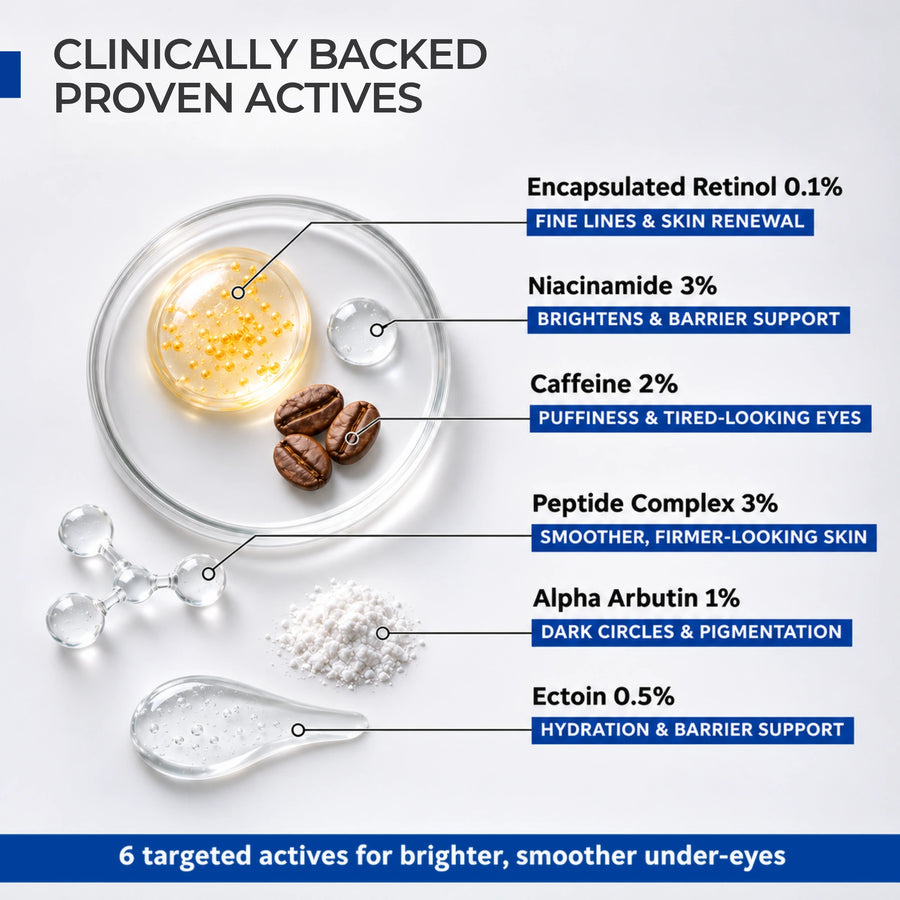
These ingredients are useful in brightening-focused skincare. They help support a more even-looking skin tone and may improve the appearance of pigmentation-related discoloration.
Caffeine
Topical caffeine is used to help temporarily reduce the appearance of puffiness. It may make the eye area look refreshed, but it cannot eliminate permanent under-eye bags.
Retinol & Peptide Complex
Retinol supports skin renewal and improves the appearance of fine lines. Peptides complement texture-focused care, although effects depend on formulation and regular use.
Ectoin
Ectoin supports hydration and the moisture barrier. Keeping delicate under-eye skin comfortable is especially important when a routine includes ingredients such as retinol.
Where Does QTWAYS
Roll-On Under Eye Serum Fit In?
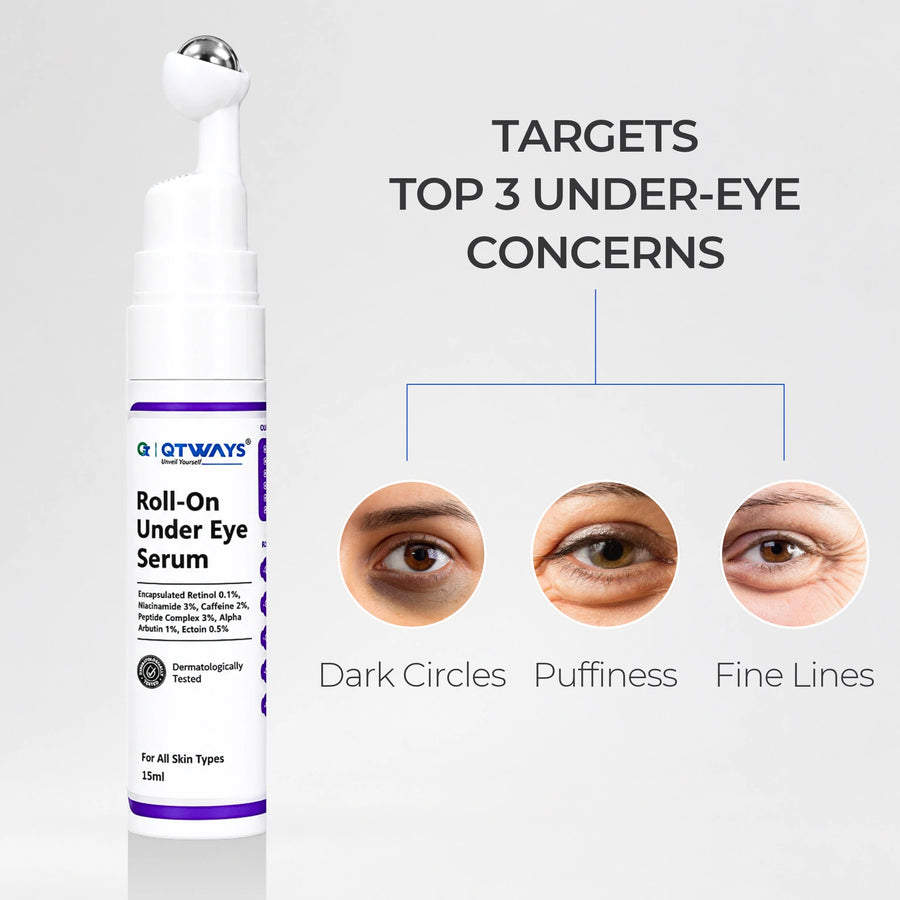
QTWAYS Roll-On Under Eye Serum brings together Encapsulated Retinol 0.1%, Niacinamide 3%, Caffeine 2%, Peptide Complex 3%, Alpha Arbutin 1% and Ectoin 0.5% in a targeted under-eye formulation.
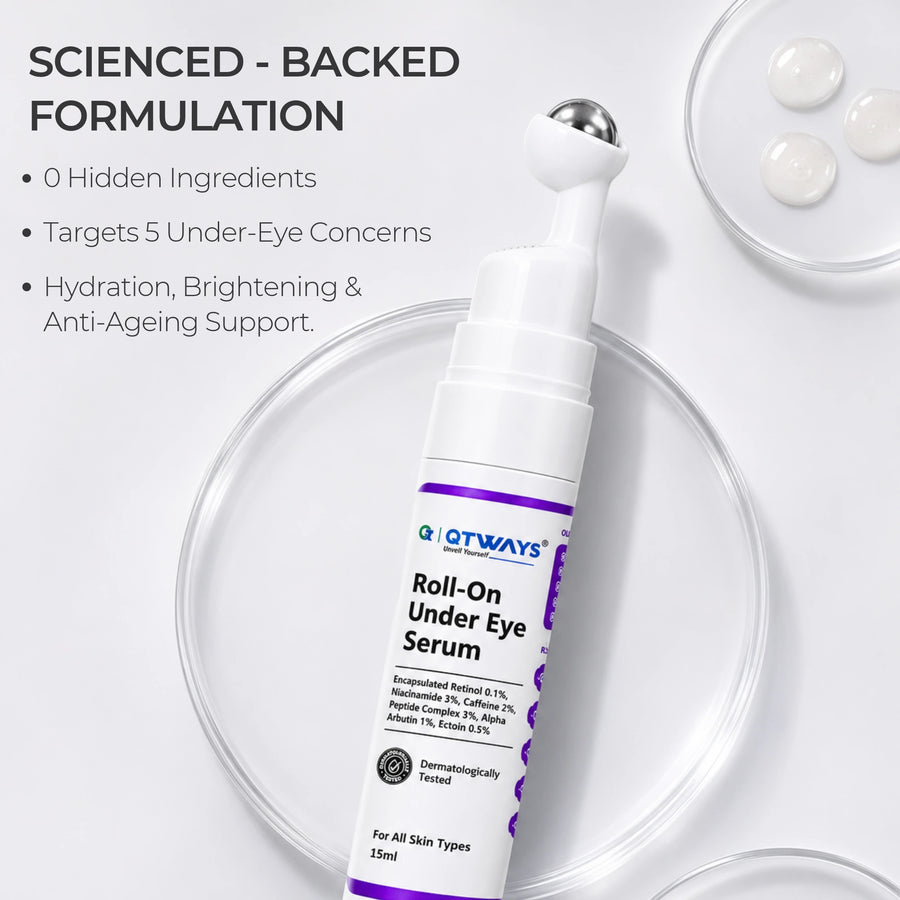
It also contains skin-conditioning ingredients, including Hyaluronic Acid, Ceramides and Panthenol, to support moisture and barrier care. Its fragrance-free formula and metal roll-on applicator are designed for convenient, gentle application.
The formula offers a multi-concern approach for people interested in improving the appearance of uneven tone, temporary puffiness and fine lines. It is not intended to correct structural hollows or replace medical assessment.
Designed for Targeted Care
A lightweight texture, transparent active concentrations and a practical applicator make this serum an easy addition to a thoughtful evening skincare routine.
Explore QTWAYS Under Eye Serum →A Simple, Skin-Friendly Routine
A balanced routine often matters more than adding another product.
Morning Protection
Cleanse gently, moisturize and use broad-spectrum SPF 30 or higher. Protecting the area from sunlight helps prevent further pigmentation.
Evening Application
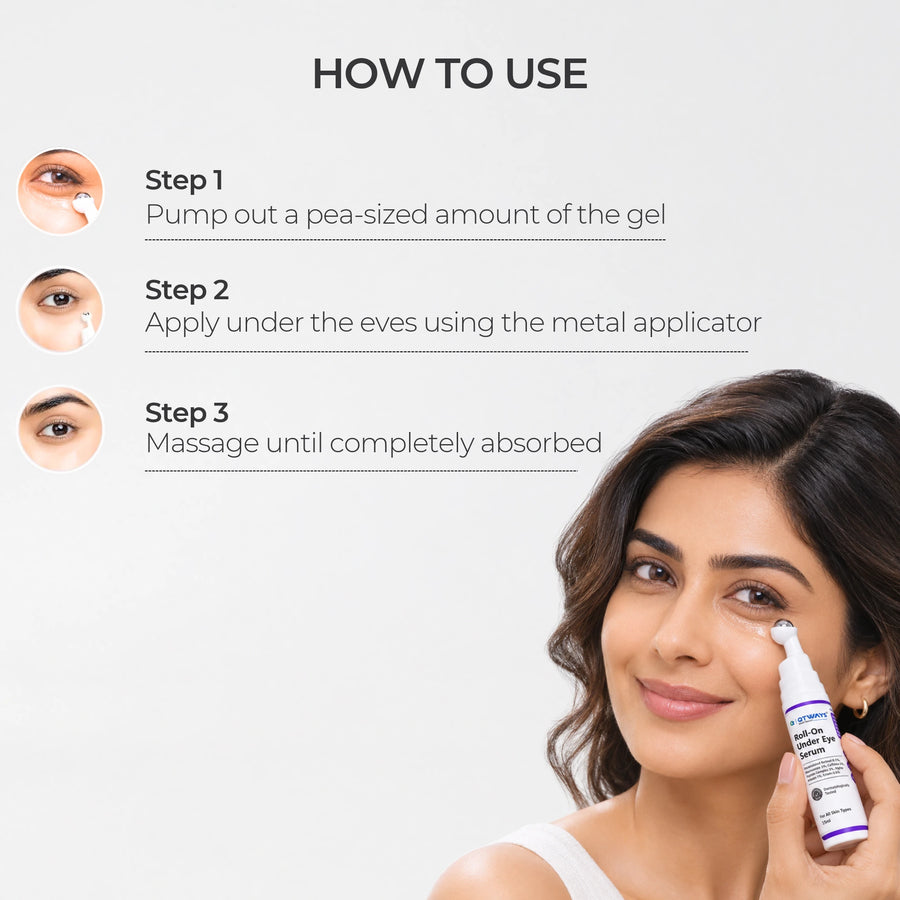
Apply the QTWAYS roll-on gently beneath the eyes after cleansing, following product directions. Avoid eyelids, the lash line and direct eye contact.
Protect the Barrier
Introduce retinol slowly and moisturize as needed. Avoid strong exfoliants around the eyes, excessive rubbing and applying products to irritated skin.
Dark Circle Myths
Worth Rethinking
"Dark circles always mean poor sleep."
Sleep can influence their appearance, but genetics, pigmentation, allergies and facial structure are also important factors.
"A stronger product always works faster."
The under-eye area is delicate. Irritation from overly aggressive skincare can be counterproductive, particularly for pigmentation-prone skin.
"One serum can eliminate every dark circle."
Skincare may improve some visible concerns, but structural shadows or certain hereditary patterns may require different approaches.
Frequently Asked Questions
What is the main cause of dark circles in Indian skin?
There is no single cause. Pigmentation, genetics, inflammation, visible blood vessels and structural shadows can all contribute.
Can niacinamide help pigmentation-related dark circles?
Niacinamide supports more even-looking skin tone and the skin barrier. Its effectiveness depends on the cause of discoloration and the complete formulation.
Can caffeine remove dark circles permanently?
No. Caffeine may temporarily improve the appearance of puffiness, but it does not permanently eliminate all causes of dark circles.
Is retinol suitable for the under-eye area?
An eye-area formulation containing retinol may help the appearance of fine lines. Introduce it slowly, follow label directions and avoid direct eye contact.
When should I see a dermatologist for dark circles?
Seek professional advice if discoloration is persistent, rapidly changing, one-sided, accompanied by swelling or irritation, or causing concern.
Understand Your Skin.
Choose Care With Purpose.
The right under-eye routine begins with understanding your concern. Explore QTWAYS Roll-On Under Eye Serum, formulated with six targeted actives for thoughtful everyday care.


